“For a body already managing a hormonal condition, rest isn’t a retreat from the world. It’s maintenance.”
I spent years being told my symptoms were normal.
Not normal as in “common, but we’ll look into it.” Normal as in “not something we’re taking seriously.” The fatigue that sat behind my eyes even after eight hours of sleep. The anxiety that arrived each month with a particular, identifiable weight. The brain fog that made certain weeks feel like I was trying to think through wet concrete. I was told these things happened to a lot of women. I was told to watch my diet, manage my stress, come back in six months.
I was in my early twenties. I didn’t even have a name for it yet.
When I eventually got a PCOS diagnosis — polycystic ovary syndrome, a hormonal condition affecting roughly one in ten women, typically going undiagnosed for years — I felt something unexpected. Not just relief at having an answer. Anger at how long I’d been carrying something without being given any real information about how to manage it.
The information I should have had much earlier is this: cortisol, the body’s primary stress hormone, directly worsens PCOS symptoms. Elevated cortisol disrupts the hormonal balance that PCOS already makes fragile. It worsens insulin sensitivity, amplifies cycle irregularity, deepens the fatigue and the mood symptoms. For women with PCOS, chronic stress isn’t just a quality-of-life concern. It’s a clinical one.
When rest stopped being optional
I don’t want to frame what happened next as a wellness awakening. It wasn’t. It was a fairly confronting realisation that rest — genuine rest, not the collapsed-at-the-end-of-the-day kind, but the kind that actually restores — was something I’d been withholding from myself for years.
Not because I didn’t value it. Because I’d absorbed, somewhere along the way, the idea that rest is earned. You rest after you’ve done enough, after you’ve been productive enough, after you’ve justified the downtime. And because I never quite felt like I’d done enough, I never quite gave myself full permission.
With PCOS, that pattern has physiological consequences. It wasn’t abstract anymore. The low-level chronic stress I’d been living inside — phone first thing in the morning, evenings that never properly closed, sleep treated as a logistical inconvenience — was making me measurably worse.

If you recognise any of this, the 7-Day Reset at marshmuse.com is a free email series built around exactly the kind of daily practices that lower your baseline stimulation and support your nervous system. It’s gentle, takes about five minutes a day, and is free at marshmuse.com.
What slow living means when your body actually needs it
Slow living gets positioned, sometimes, as a lifestyle aesthetic. The linen and the botanicals and the curated calm. I understand why — those things are genuinely calming, and there’s nothing wrong with wanting your space to feel peaceful.
But for women with hormonal conditions, with autoimmune conditions, with chronic fatigue — slow living is less of a choice and more of a maintenance requirement. Consistent sleep and wake times matter because cortisol regulation depends on rhythm. A morning without immediately reaching for your phone matters because of what the Cortisol Awakening Response does to your stress baseline. Eating in a way that supports blood sugar stability matters for insulin sensitivity. These aren’t grand statements. They’re small, repeatable choices that compound.
The part that took me longest to accept was that none of this is self-indulgence. For a body that’s already managing a hormonal condition, a lower-stimulation life isn’t a retreat from the world. It’s physiological maintenance, and it’s reasonable.
What have you been treating as a character flaw that might, in fact, be a symptom?
The exhaustion. The fog. The way rest doesn’t seem to restore you. Write it down plainly — not to fix it today, but to stop calling it a failing.
The thing I’d tell myself earlier
Not “take better care of yourself” — that advice is useless without specificity.
This: the exhaustion you’re treating as a character flaw is a symptom. The anxiety you’re treating as a personality trait is, in significant part, hormonal. The fact that rest doesn’t restore you the way it seems to restore other people isn’t evidence that you’re doing rest wrong — it’s evidence that you need more support than you’ve been giving yourself.

The 7-Day Reset at marshmuse.com is a free seven-day practice built around exactly these ideas. If you have PCOS, or any condition where stress management isn’t optional, it might be a useful place to start.
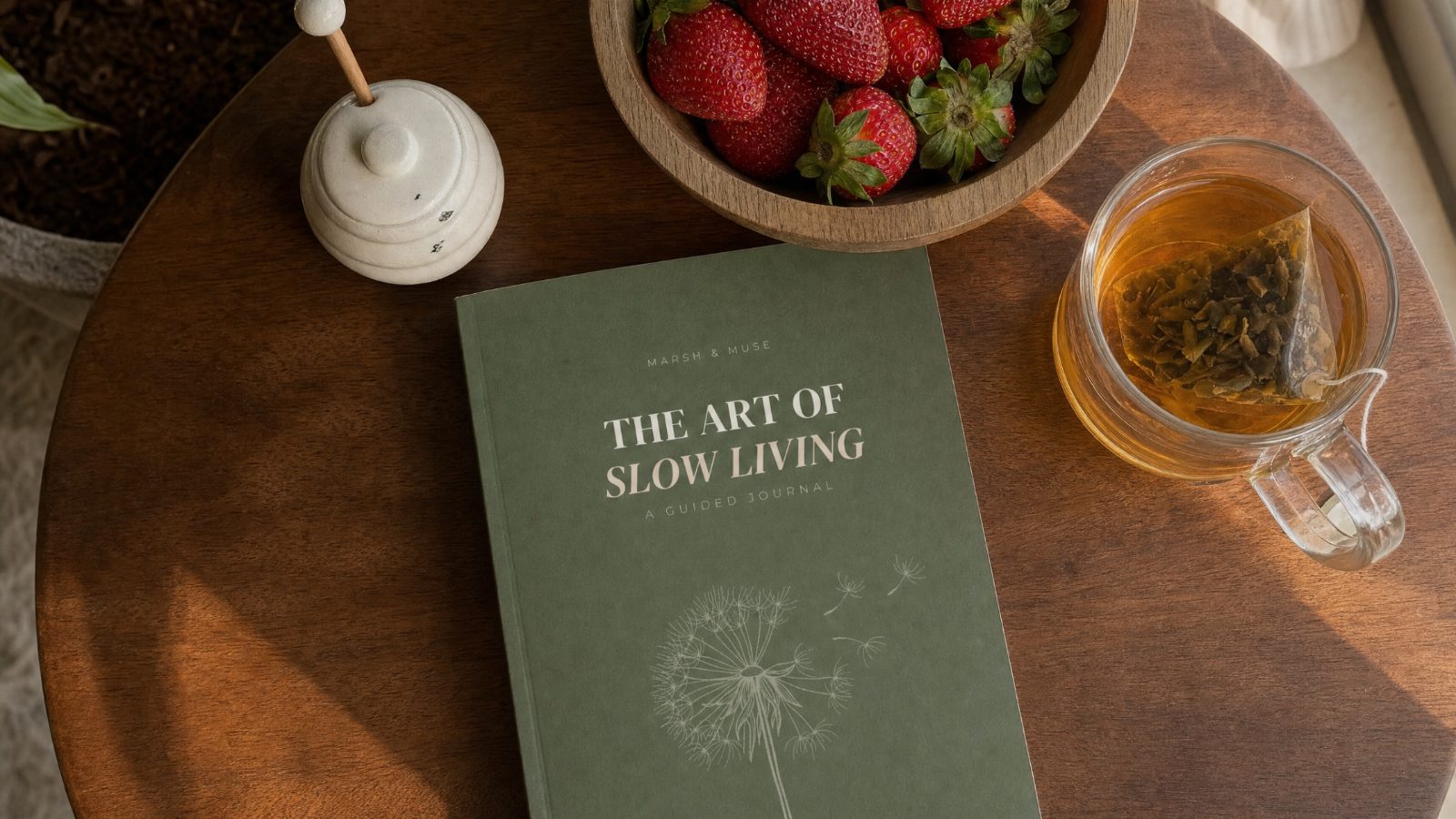
The Art of Slow Living journal is built around the four things I keep returning to when life runs too fast: clarity, presence, nourishment, and rest. It’s on Amazon, and it’s the tangible version of everything I write about here.
Marsh & Muse
You need more support than you’ve been giving yourself.